Learn the game
Vault, Blood, and Loyalty
Three terms carry the resource system in Hellbreak, and they all interact, so here they are together.
The Vault is your engine
In the official site’s own words, your Vault is your source of power: as the game progresses, you add cards to it to build the resources and aspect icons you need to unleash stronger cards. Practically, this means your Vault is not a hand or a discard pile, it is a growing pool that determines what you are able to afford later.
Blood is the cost you pay
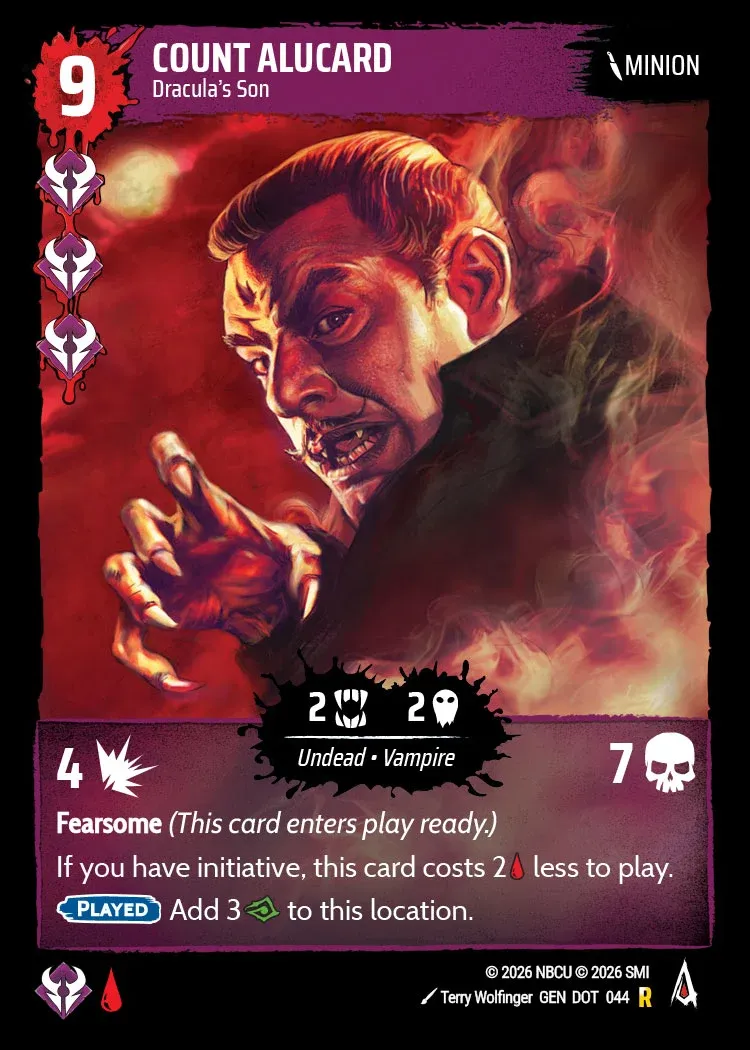
Every playable card has a Blood cost attached to it: the official card-anatomy example given is Count Alucard, who costs 9 Blood. This is your currency, spent out of what your Vault has built up.
Loyalty is the second gate
Paying a card’s Blood cost is not enough on its own: you also need enough matching aspect icons sitting in your Vault. The official rule, stated plainly: to play a card, you must pay its Blood cost and have enough matching aspect icons in your Vault. In other words, Blood tells you if you can afford a card. Loyalty tells you if your Vault has been built in the right direction to actually cast it.
What this means at the table, our read rather than a confirmed ruling: a deck that spreads itself across too many aspects risks a Vault that never hits Loyalty for its best cards, even with plenty of Blood banked. Until Learn to Play publishes deck-building restrictions, we would treat aspect focus as a real design consideration rather than a nice-to-have, but we will revise this once the actual restrictions are public.
Keep reading