
Learn the game
How to read a Hellbreak card
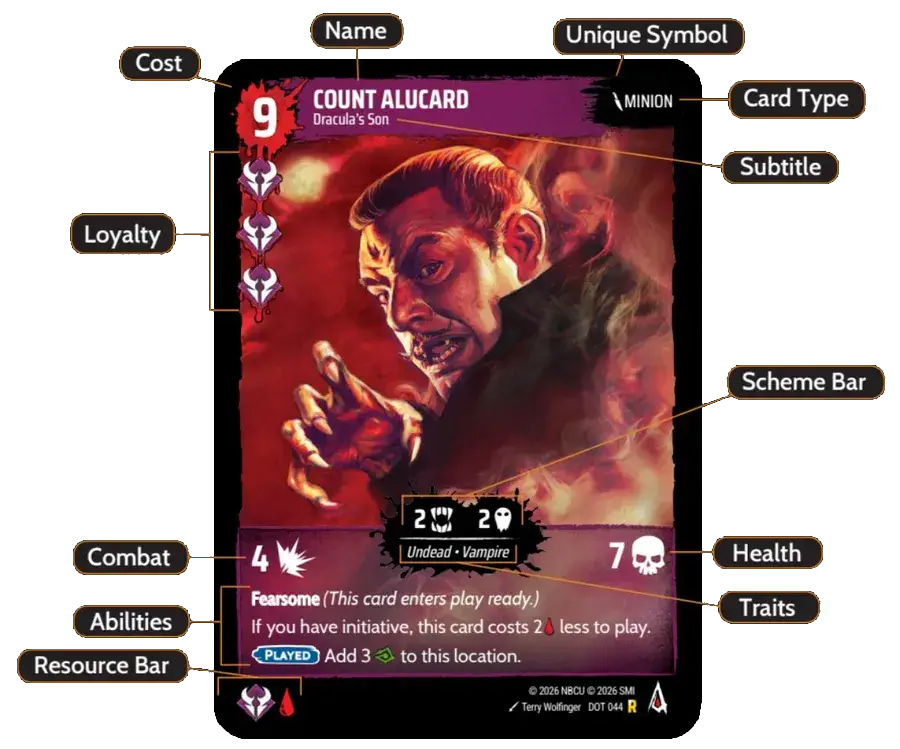
Before evaluating a Hellbreak card, it helps to know what you are looking at. The official rules hub breaks a card down into eleven parts. We are adding a twelfth here: the unique-card bullet, a rule confirmed by the Quick-Start Rules PDF rather than the anatomy graphic itself.
Here is what each part means in practice.
- Card name and card type
- Up top, telling you what you are holding and which of the five types it belongs to.
- Unique symbol
- A bullet before the name means one copy in play per name. Control a second and you immediately kill one.
- Cost
- The amount of Blood you must spend to play the card.
- Loyalty
- The aspect-icon requirement sitting alongside it, the second gate covered on our Vault, Blood, and Loyalty page.
- Combat value
- The card’s combat value, used when it fights.
- Health
- What it takes to bring the card down.
- Ability text
- The plain-language rules text specific to that card, the part you actually read during a game.
- Resource bar and scheme bar
- The strips telling you what a card contributes to your Vault and what it can do toward a scheme, respectively.
- Traits
- The keyword tags a card carries, the kind of thing later cards can reference (Feral, say, or a franchise tag).
- Collection data
- The bookkeeping: set, number, that sort of thing, useful for collectors more than players mid-game. The letter beside the collector number is the rarity: Common, Uncommon, Rare, Legendary, Infamous, or Special, per the official rarity key.
Two printed symbols on the frame have no published name we can find. Rather than invent one, our card pages render them as labelled chips and say plainly which are guesses. The exception is malice, which the Quick-Start Rules PDF names directly.
Every card revealed during Card Reveal Season can already be read against this template, so our card database can document each reveal accurately and specifically as it happens.
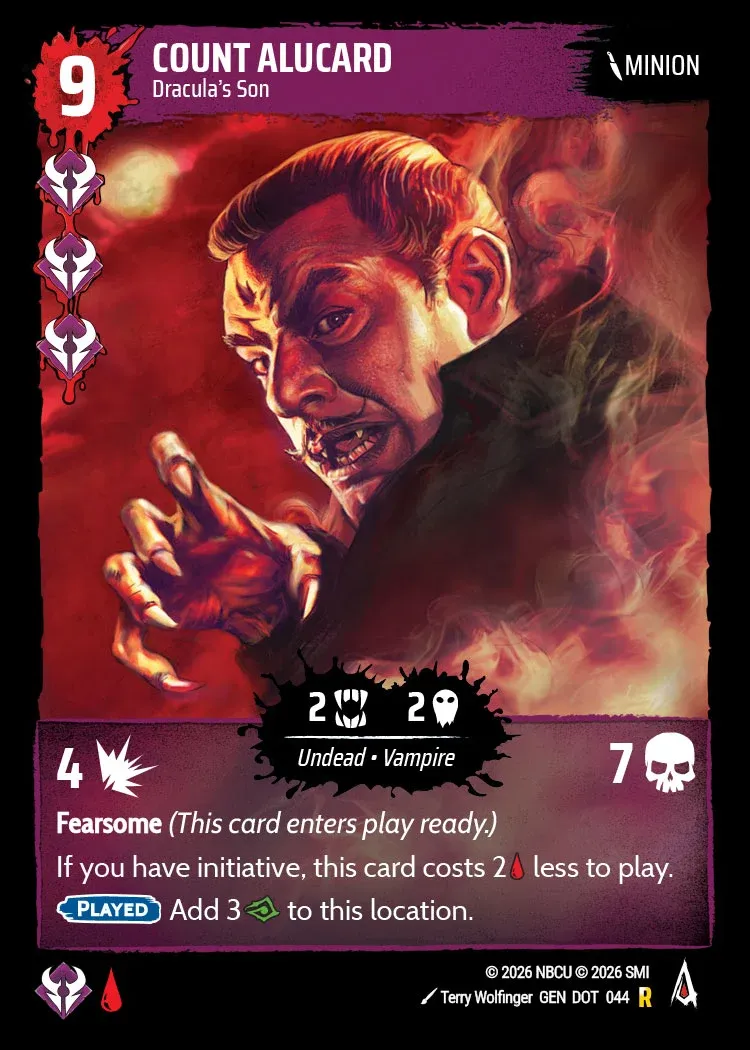
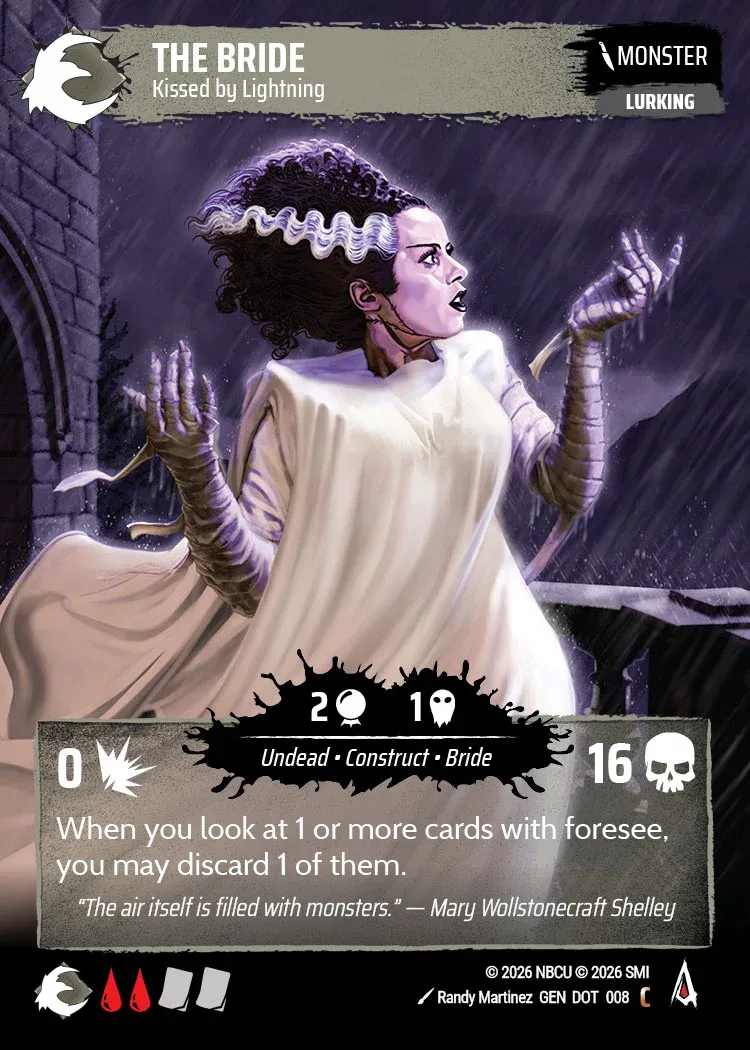
Read one for yourself
Keep reading